The Tiny Parts That Hold Big Structures Together
If you’ve ever looked at a steel structure, a gate, a car, a water tank tower, or even a simple shelf and wondered “what’s actually holding this together?”, the answer is often bolts.
Bolts might look small, but in engineering and construction they are serious business. A correctly chosen and properly tightened bolt can carry heavy loads for decades. A wrong bolt (or a good bolt installed badly) can cause loosening, rusting, leaks, cracks, or even structural failure.
Let’s break bolts down in a clear, practical way.
What Is a Bolt?
A bolt is a fastener made of a head and a threaded body (shank). A bolt usually works together with a nut (and often washers) to clamp materials tightly.
Think of a bolt as a strong “mechanical clamp” that can be installed, removed, and reused (if still in good condition).
Why Bolts Matter in Construction and Fabrication
Bolts are used because they offer:
- Strong connections between steel-to-steel, steel-to-concrete, or steel-to-timber parts
- Easy installation and maintenance (you can unbolt and replace parts)
- Reliable clamping force when tightened correctly
- Speed on site compared to welding in some situations
- Consistency (factory-made, measurable strength)
Main Parts of a Bolted Connection
A typical connection includes:
- Bolt head (hex head is the most common)
- Shank (the smooth or threaded body)
- Threads (the spiral grooves)
- Nut (tightens onto the bolt)
- Washers (spread load, reduce damage, improve clamping)
- Connected plates or members (the steel parts being joined)
Common Types of Bolts (And Where They’re Used)
1) Hex Bolts (Standard Bolts)
The everyday bolt used in general steelwork, machinery, frames, brackets, and repairs.
Where you’ll see them: steel gates, roof trusses, light structures, plant equipment.
2) Structural Bolts (High-Strength Bolts)
Built for heavy-duty structural connections and higher loads.
Where you’ll see them: warehouses, bridges, towers, heavy steel frames.
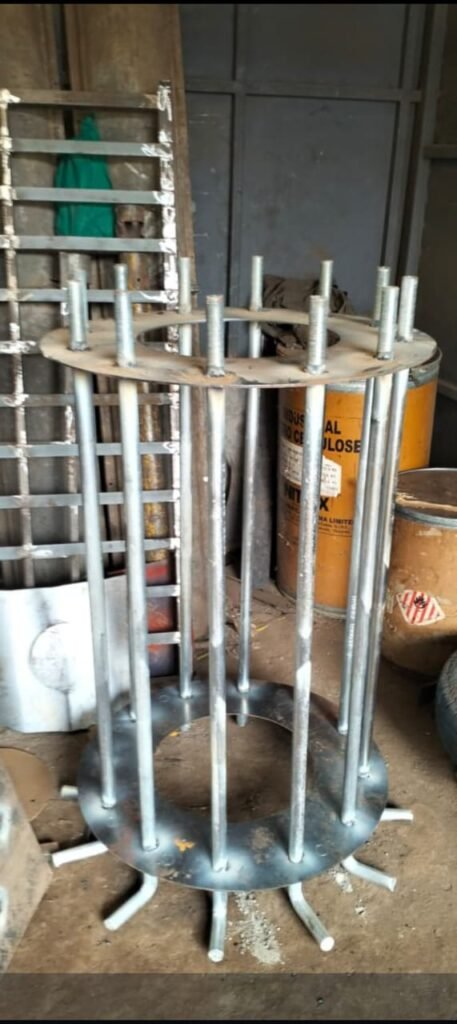
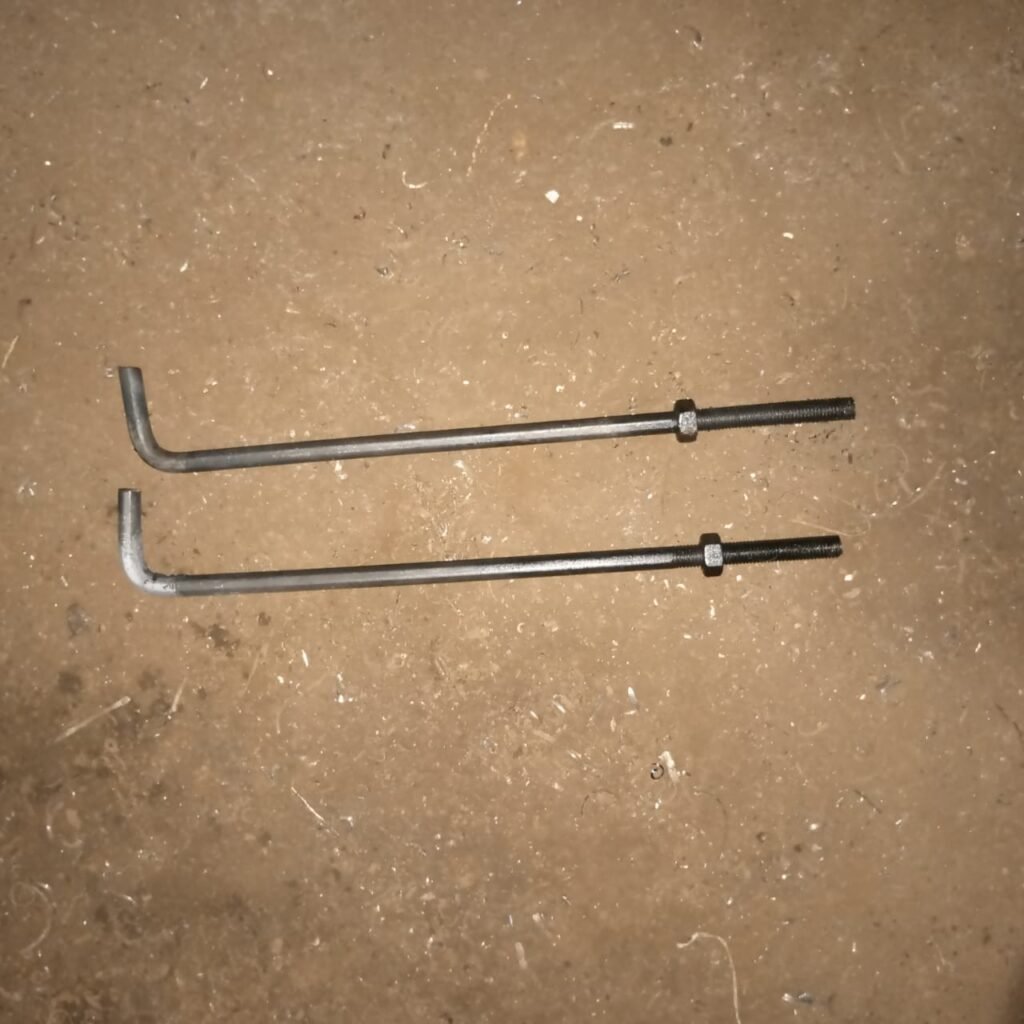
3) Anchor Bolts
These connect steel columns or base plates to concrete foundations. They’re “cast-in” or fixed into concrete.
Where you’ll see them: column bases, streetlight poles, watch towers, warehouse frames.
4) Carriage Bolts
Rounded head with a square neck that locks into wood or metal to prevent spinning.
Where you’ll see them: timber connections, fencing, benches, playground equipment.
5) U-Bolts
Shaped like a “U”, used to clamp round pipes to supports.
Where you’ll see them: pipe supports, handrails, signage posts, exhaust systems.
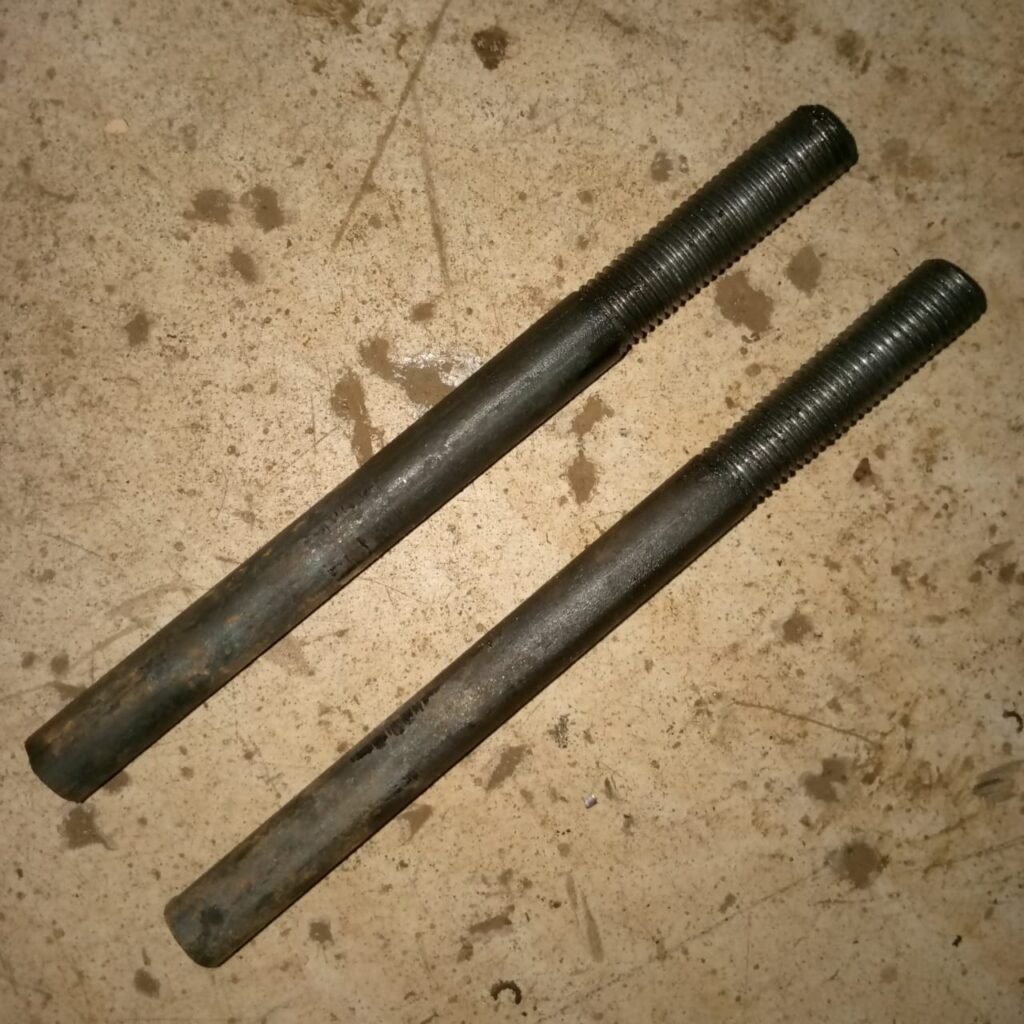
6) Stud Bolts
Threaded along the full length (or both ends) and commonly used with two nuts.
Where you’ll see them: flanges, pressure piping, industrial plants.
Bolt Grades: Strength Matters
Not all bolts are equal. Bolt “grades” or “property classes” show strength.
For example:
- A stronger bolt can carry higher tension and shear loads
- A weaker bolt might stretch, snap, or loosen under heavy vibration
In real projects, always match the bolt grade to the job and follow the engineer’s specifications—especially in structural steelwork.
Bolt Size and How It’s Described
Bolts are identified by:
- Diameter (example: M12, M16, M20 — the “M” means metric)
- Length (example: 60 mm, 100 mm)
- Thread pitch (fine or coarse threads)
- Finish/coating (black, zinc-plated, hot-dip galvanized)
- Grade/class (strength rating)
A bolt marked M16 x 80 means:
- 16 mm diameter
- 80 mm long
Bolting vs Welding: When Bolts Win
Bolts are often preferred when:
- You need easy disassembly later (maintenance, replacement)
- The site conditions make welding difficult (wind, power limits)
- You want consistent quality without welding heat effects
- You’re assembling prefab steel parts quickly
Welding is great too, but bolts are often faster for site assembly and very dependable when done right.
Common Bolt Problems (And How to Avoid Them)
Problem: Bolts loosening over time
Causes: vibration, incorrect tightening, missing washers
Fix: correct torque, use lock nuts, spring washers, or thread-lock where appropriate
Problem: Rust and corrosion
Causes: outdoor exposure, moisture, coastal environments
Fix: hot-dip galvanized bolts, proper paint system, avoid mixing metals that cause corrosion
Problem: Stripped threads
Causes: cross-threading, over-tightening, poor-quality bolts
Fix: proper alignment, correct tools, avoid forcing nuts
Problem: Wrong bolt length
Causes: not checking grip length (the thickness being clamped)
Fix: ensure enough thread is showing past the nut, but not excessively long
Quick Safety Notes for Practical Work
When working with bolts in a workshop or on site:
- Wear eye protection (chips and metal dust happen)
- Use the right spanners/sockets (avoid slipping injuries)
- Avoid over-tightening (you can weaken the bolt)
- Keep bolts clean and dry before installation (especially high-strength bolts)
- Never reuse damaged or stretched bolts in important connections
Final Thoughts: Bolts Are Small but Powerful
Bolts are one of the simplest engineering inventions—yet they hold together some of the biggest structures on earth. When you understand bolt types, sizes, strength, and correct installation, you unlock a huge part of real-world building knowledge.